|
|
Hi there, this is your daily ☕️ MarketingShot.
|
|
|
In today's MarketingShot:
|
|
📺 YouTube just passed TV for political news 🍪 EU may let sites re-ask cookie consent after 4 months 📉 One agency's Search clicks fell to 41% as AI shoppers research first 📈 Meta says creators lower your cost per purchase in EMEA tests 🚫 Google just changed how you block ad inventory in DV360 Plus: 💡 6 strategies & tactics, 🎁 7 more stories you might like, and 🧰 7 trending marketing tools.
|
|
100+ ChatGPT Prompts to Revolutionize Your Day
Industry-Specific Use Cases: 15+ real-world applications across various sectors
Productivity Guide: 21 best practices to 10x your efficiency with AI
Prompt Powerhouse: 100+ ready-to-use prompts for immediate implementation
Challenge Buster: Overcome common AI hurdles with expert strategies
Plus, in-depth sections on email composition, content creation, customer support, and data analysis.
|
📺 YouTube just passed TV for political news
LINK
|
- YouTube has passed television as the source Americans say they use most often for political and election news, according to the first Industry Flash Report from Syracuse University's Center for the Creator Economy.
- In a survey of 1,001 U.S. adults run with Prolific, YouTube drew 16.5% of answers, narrowly ahead of TV news, with news websites and apps next and X close behind.
- The report also found that 61% trust independent news creators as much as network broadcasters, though its authors note the sample comes from an institution invested in the creator economy and should be read as a signal rather than a final verdict.
|
🍪 EU may let sites re-ask cookie consent after 4 months
LINK
|
- EU member states are expected to vote yesterday on the Council's negotiating mandate for the Digital Omnibus, a draft that would let websites ask again for cookie consent four months after a refusal instead of the current six.
- Under the rewritten Article 5(3) of the ePrivacy Directive, users must be able to refuse with a single-click button, and the text also lets sites measure contextual advertising without consent, as long as data is pseudonymised and not used for profiling or programmatic ads.
- None of this is law yet, because the European Parliament still has to set its own position and then negotiate a final text with the Council, and the draft drops any rule forcing sites to honour browser-level consent signals.
|
📉 One agency's Search clicks fell to 41% as AI shoppers research first
LINK
|
- Brainlabs reported that Search campaigns pulled in just 41% of the Google Ads clicks it bought for 31 client accounts in August 2026, down from 62% in January 2024, while Search's share of spend slipped from 86% to 71%.
- The agency links the drop to shoppers asking tools like ChatGPT to compare options before they click, so research now finishes inside the answer; it argues keyword buying captures less of the decision, though the shift also reflects its own moves toward Performance Max and Demand Gen.
- Brainlabs says clicks that do arrive from AI platforms convert better, with a key event rate of 13.4% against 10.4% for organic search, and it urges giving AI referrals their own channel in GA4 and using holdout groups to measure what ChatGPT ads actually caused.
|
📈 Meta says creators lower your cost per purchase in EMEA tests
LINK
|
- Meta says ads made with creators cut the cost per purchase in European tests, reporting a 45% lower median cost per incremental purchase in studies across Europe, the Middle East and Africa (EMEA).
- The finding comes from a meta-analysis of conversion lift studies run by EMEA advertisers in the first half of 2025, comparing normal campaigns against ones where at least 30% of assets were partnership ads, which also showed 35% higher median incremental ROAS.
- Meta frames the 30% share as a planning figure to brief against, though it states the result at a confidence level below the threshold commonly used in testing, and much of the paper's evidence comes from Meta's own internal analyses.
|
🚫 Google just changed how you block ad inventory in DV360
LINK
|
- Google removed sensitive categories and digital content labels as brand suitability controls for programmatic inventory in Display & Video 360 on October 1, 2026, folding display, video, Connected TV and audio buys into the same controls that already govern YouTube.
- The old tick-boxes gave way to a single choice of three safety levels, Maximum, Moderate and Limited, plus ten topic filters built for YouTube, with the announcement giving no count of affected advertisers, no mapping from old categories, and no migration tool.
- The Media Rating Council accreditation behind those inventory modes covers YouTube only on computers and phones, excluding Connected TV, while audio keeps the thinnest controls since third-party brand safety vendors cannot check it in the platform.
|
|
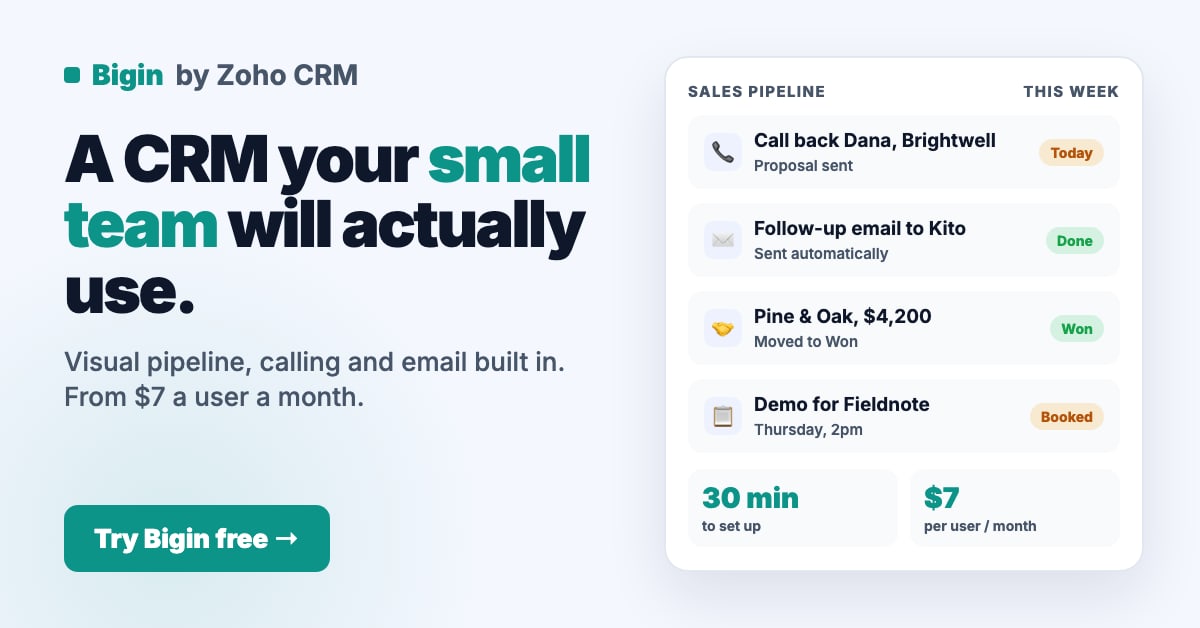
Most CRMs are built for enterprises. Bigin is built for small teams who need pipeline management without the bloat, the complexity, or the $99/seat price tag. • Visual pipeline management. See every deal at a glance • Built-in calling, email, and workflow automation • Starts at just $7/user/month |
|
Strategies & Tactics
|
> How to track ChatGPT traffic in GA4: Filter GA4 by "gpt" to isolate ChatGPT referrals, then study the cited landing pages to learn which prompts send this high-engagement traffic.
|
|
|
Other
news & articles you might like
-
Amazon to sell ads asking buyers to review products under 1,000 ratings
LINK
-
Claude citations: What Claude cites, from 295 sources
LINK
-
Meta's shopping agent must fill its top 5 picks with well-known merchants
LINK
-
We checked 56 of America’s biggest brands: Newsrooms lock AI out, everyone else leaves the door open
LINK
-
Brands can block YouTube ads beside AI slop under new IAS tool
LINK
-
Nextdoor lets advertisers target 350,000 neighborhoods instead of ZIP codes
LINK
-
Google Ads lets business names differ from domains under 3 conditions
LINK
|
|
Trending Marketing Tools
|
Ami AI: analyzes your website to pick high-converting buyers, plans outbound campaigns backward from your lead goals, then runs and self-corrects the outreach automatically.
LINK
|
|
CREEM 2.0: a payments platform for AI builders that handles checkout, taxes, payouts, affiliates and usage billing, so you can sell globally faster.
LINK
|
|
Clara AI SDR: engages and qualifies website visitors in real time, handles objections, books meetings, and syncs continuously with your CRM
LINK
|
|
Onepin: fixes mispronounced names, prices, and dates in AI voiceovers across 30+ engines, scoring each line and correcting words without re-rendering.
LINK
|
|
akta.pro: private company data API with event tracking, news, and entity resolution, helping finance and GTM teams source deals faster
LINK
|
|
HarnessRouter: open-source API that connects 20+ agent harnesses like Codex and Claude Code through one interface, self-hosted via Docker with your own keys and state.
LINK
|
| |
|
Our AI Academy has 330+ step-by-step tutorials on ChatGPT, Claude, Perplexity, and every tool that matters. No fluff — just practical workflows you can use at work. Try it free for 7 days.
|
|
💬 How did you find today's edition?
We read every reply — just reply to this email and let us know how we can improve!
|
|